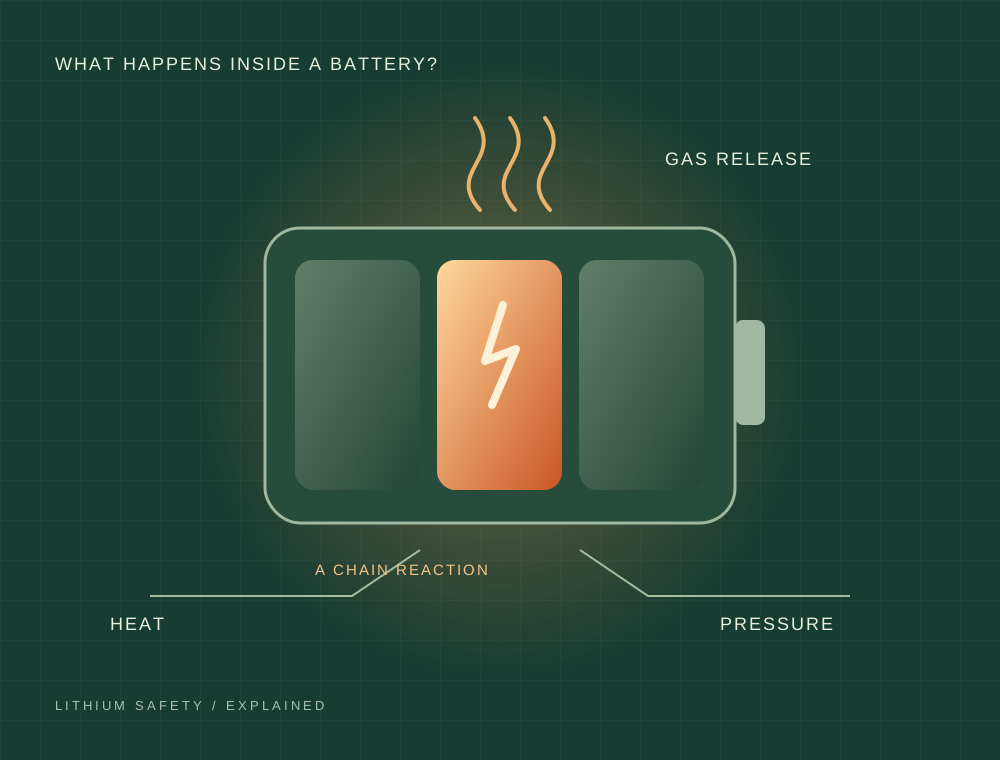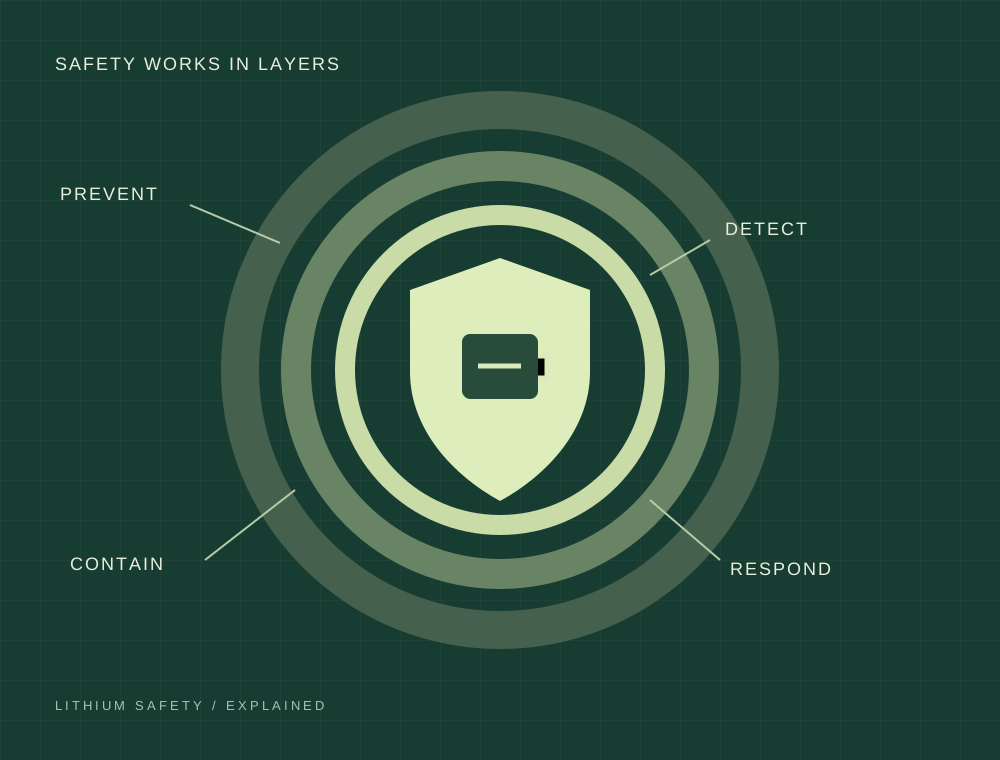
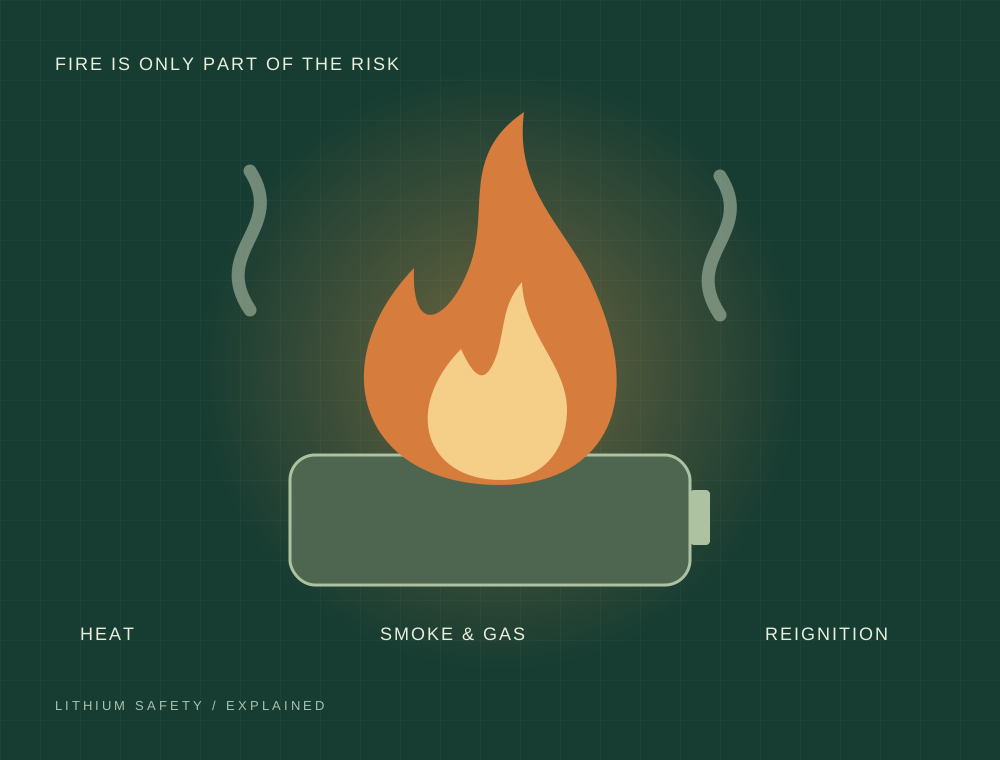
Simplified educational illustration of battery-safety principles.
A lithium-ion battery incident can involve several hazards at once. Heat, flammable gases and ejected material can affect the area around a battery pack. An event may also spread between cells or create additional points of ignition.
Why an extinguished flame is not the end
Reignition is possible after the visible fire appears to have stopped. Post-incident assessment and continued monitoring are part of the response described by fire-service guidance.
Put people and access first
An emergency plan should establish how people leave the affected area and how responders are informed of battery locations and conditions. Do not turn a workplace awareness guide into an improvised firefighting procedure.
Leave incident control to trained responders
If smoke, fire or venting indicates an active incident, move away, raise the alarm and follow the site’s emergency procedure. Response, cooling and decisions about subsequent handling belong to trained responders using appropriate information and protection.
Review the battery activity, warning signs and site procedures together. Make sure the team knows who to contact and what to do if a concern is identified.
Bring the details to your project.
Tell us how batteries are used, stored and charged in your operation.
Talk to our team ↗