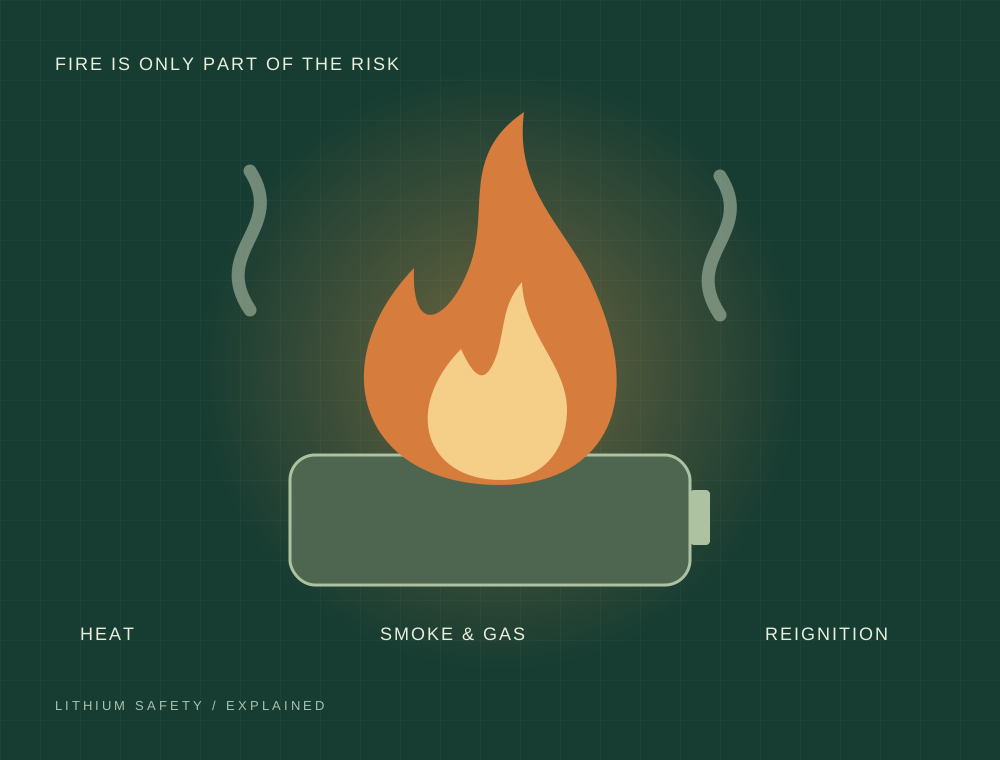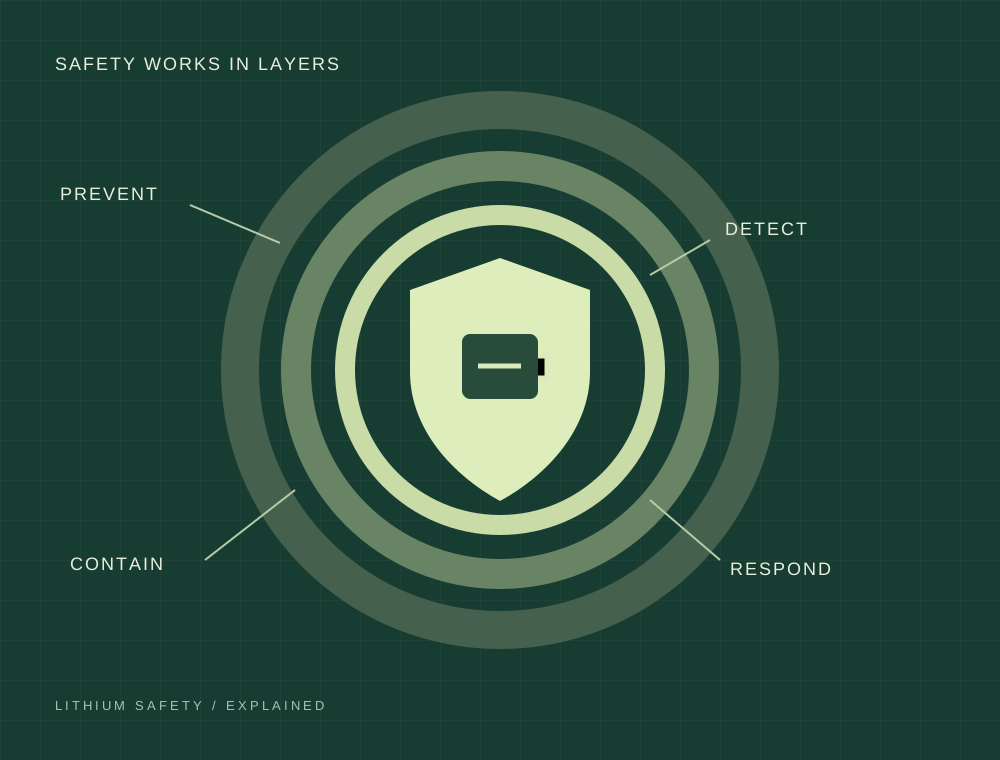
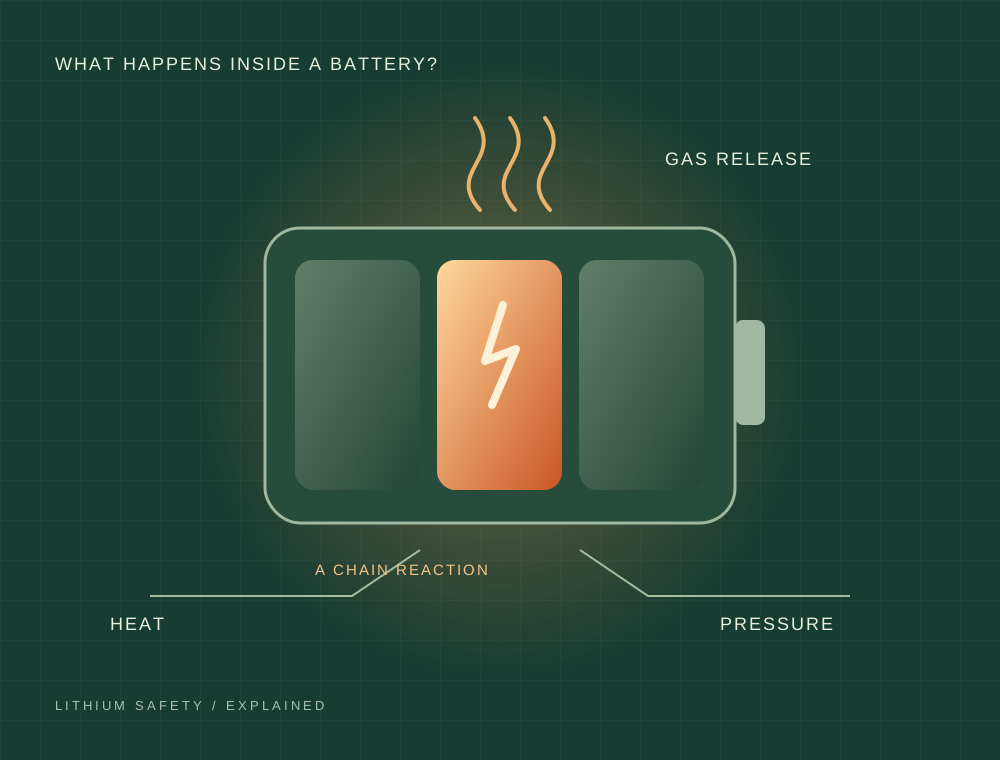
Simplified educational illustration of battery-safety principles.
Lithium-ion batteries store energy in a compact form. When a battery enters thermal runaway, an escalating internal reaction produces heat and pressure. The event can progress to fire or explosion.
Why it can spread
The concern is not limited to the first affected battery. Heat can expose nearby batteries and combustible materials, making the surrounding storage arrangement part of the risk.
Think beyond visible flames
Monitoring and detection can provide warning of changing conditions. Off-gas detection, temperature monitoring and a planned response serve different purposes; they should be considered together.
What this means for your workplace
Know where batteries are stored and charged. Discuss the consequences of a fault at that location, who receives an alarm and how the site team responds. Good planning looks at the incident as a sequence, rather than assuming one piece of equipment solves every stage.
Review the battery activity, warning signs and site procedures together. Make sure the team knows who to contact and what to do if a concern is identified.
Bring the details to your project.
Tell us how batteries are used, stored and charged in your operation.
Talk to our team ↗