Simplified educational illustration of battery-safety principles.
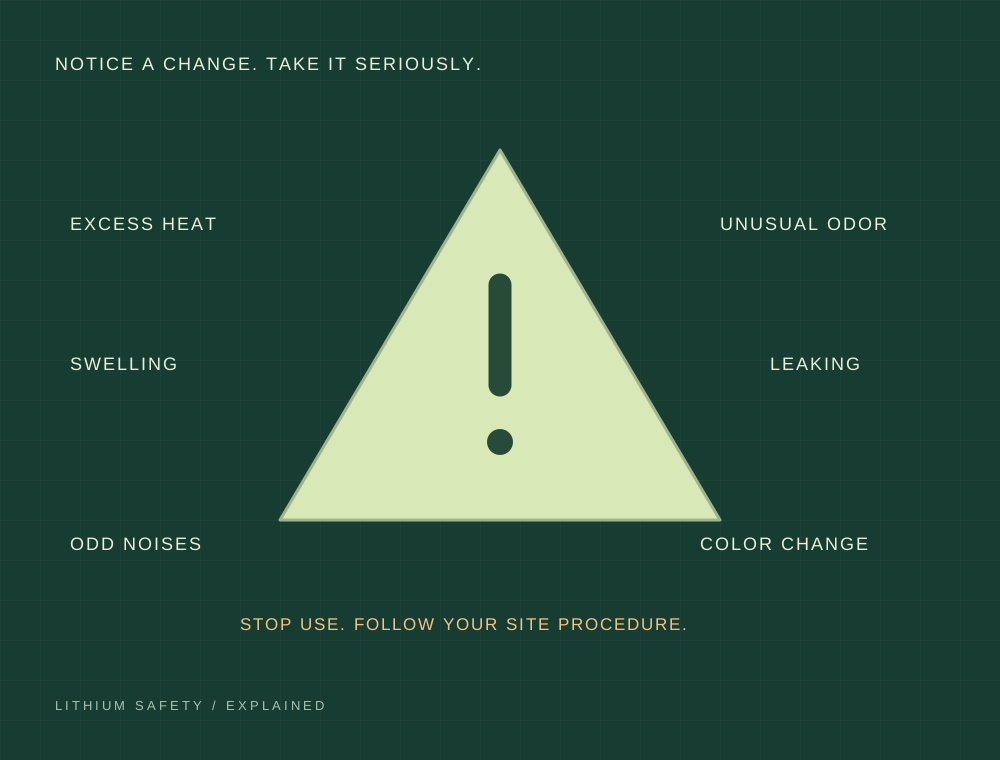
Stop using a lithium-ion battery if you notice an unusual odor, a change in color or shape, excessive heat, leaking or unexpected noises. These are reasons to take the battery’s condition seriously, even before any flame appears.
Give returns a decision point
A workplace needs a clear way to report a concern and identify who assesses the next step. Do not return a suspicious battery to routine charging while waiting for a decision.
Separate routine disposal from an incident
Lithium-ion batteries do not belong in ordinary rubbish or general recycling bins. Arrange the appropriate battery recycling route for batteries that are ready for disposal. An actively hot, smoking or venting battery requires an emergency response, not a routine recycling trip.
Make the signs familiar
Include battery condition in staff awareness and receiving procedures. A simple reporting process helps prevent an unusual battery from disappearing back into everyday stock.
Review the battery activity, warning signs and site procedures together. Make sure the team knows who to contact and what to do if a concern is identified.
Bring the details to your project.
Tell us how batteries are used, stored and charged in your operation.
Talk to our team ↗