
Understand lithium.
Understand the risk.
Articles about battery hazards, fires and practical prevention. Learn what can go wrong, what containment means and how to prepare your operation.
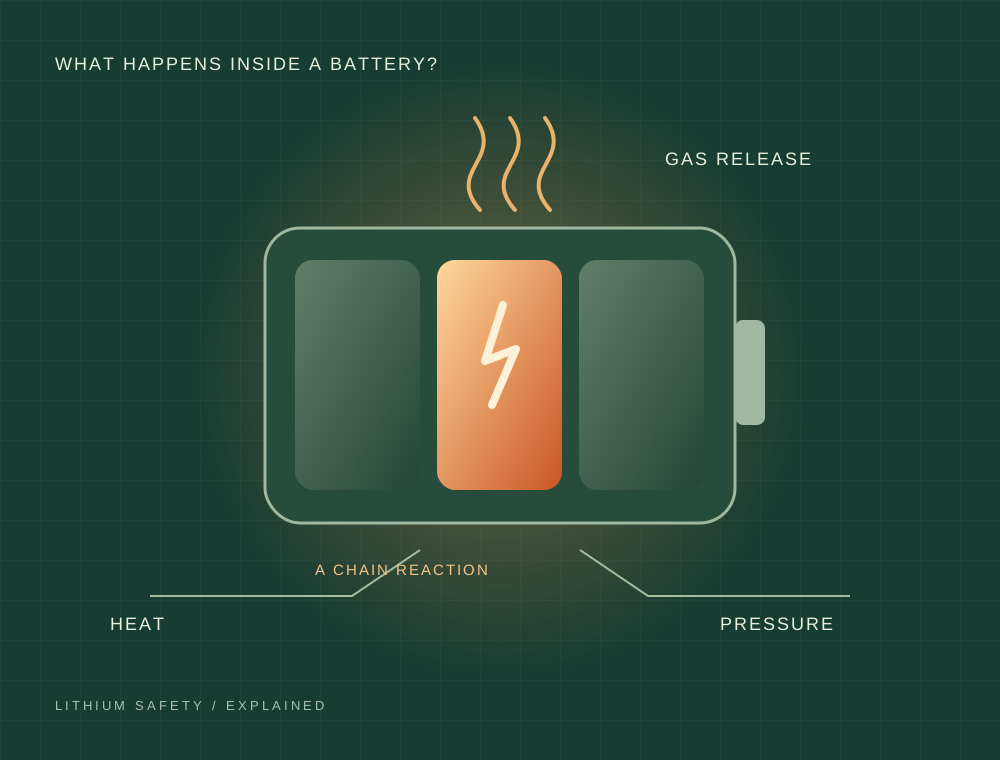
Thermal runaway: when a battery heats itself
An internal chain reaction can turn one battery fault into a much larger incident.
Read the featured guide ↗A clearer view of battery safety.
Fire & hazardsThermal runaway: when a battery heats itself
An internal chain reaction can turn one battery fault into a much larger incident.
2 min read Read article ↗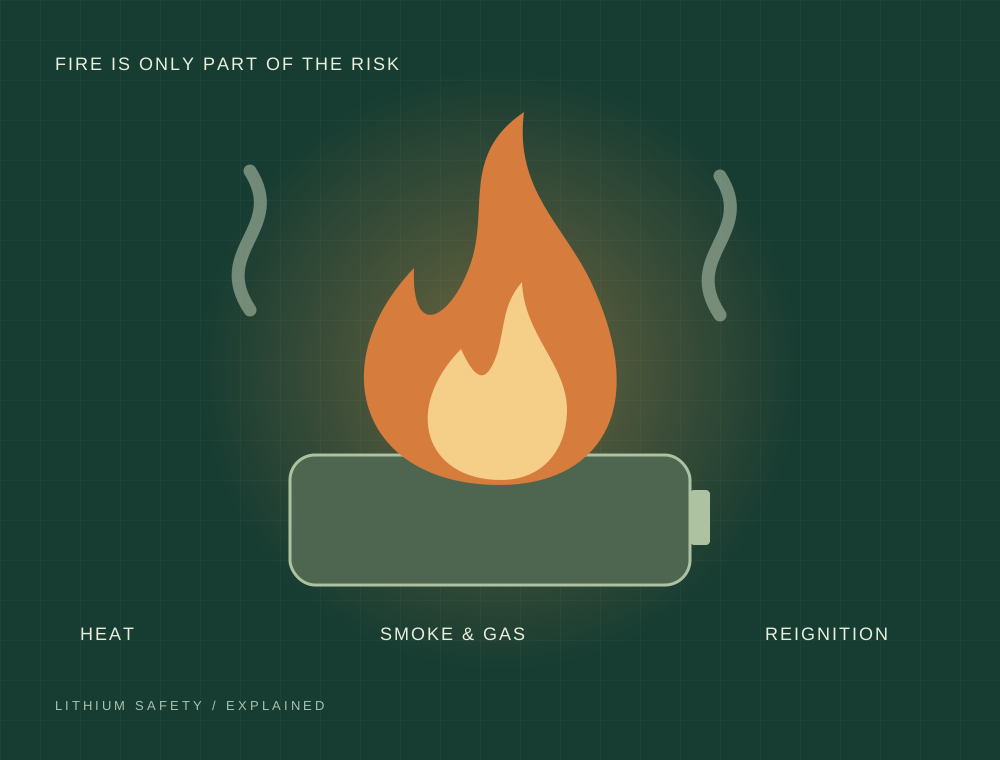 Fire & hazards
Lithium battery fires: flames are only one hazard
Heat, released gases and possible reignition make these incidents different from an ordinary small fire.
2 min read Read article ↗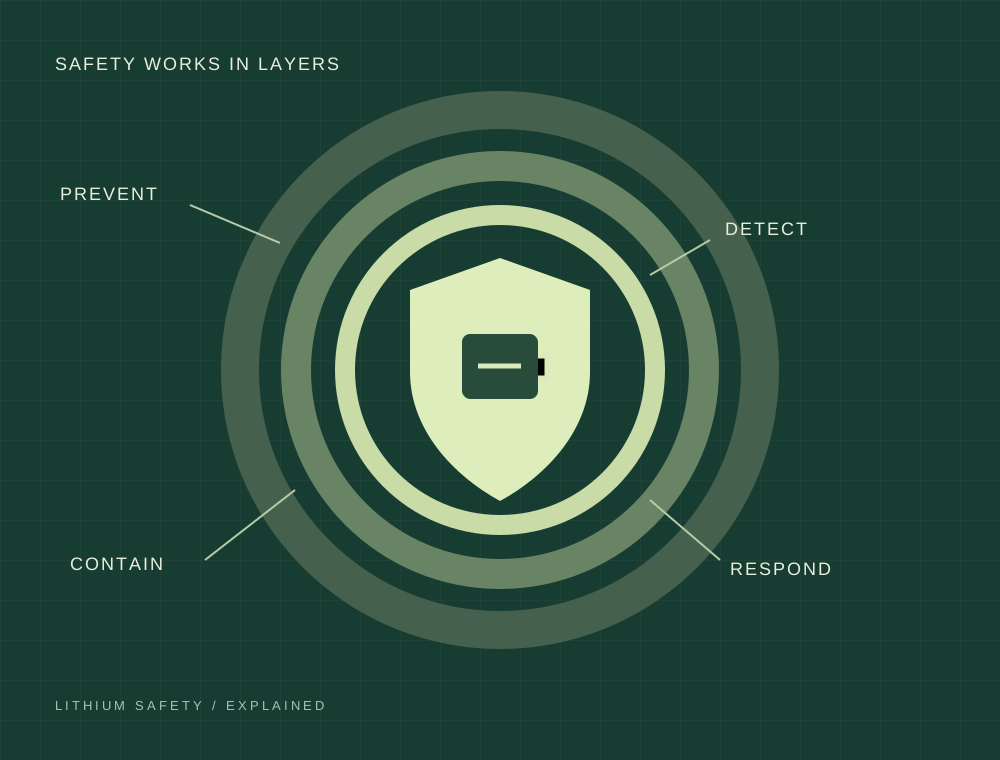 Prevention & containment
What does containing a battery incident actually mean?
Prevention, detection, containment and response work together. They are not interchangeable.
2 min read Read article ↗Fire & hazardsBattery smoke and gases deserve their own safety plan
A fire-resistance time does not answer every question about the air around an incident.
2 min read Read article ↗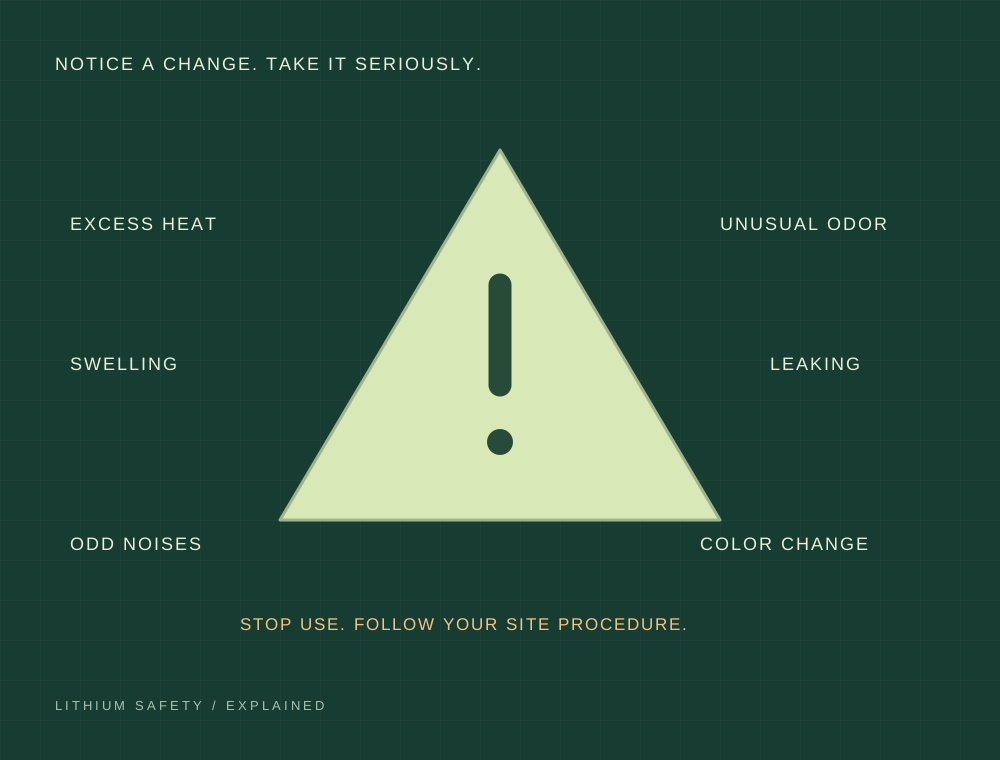 Fire & hazards
Warning signs: when to stop using a battery
Unusual heat, swelling, odor or noise should change what happens next.
2 min read Read article ↗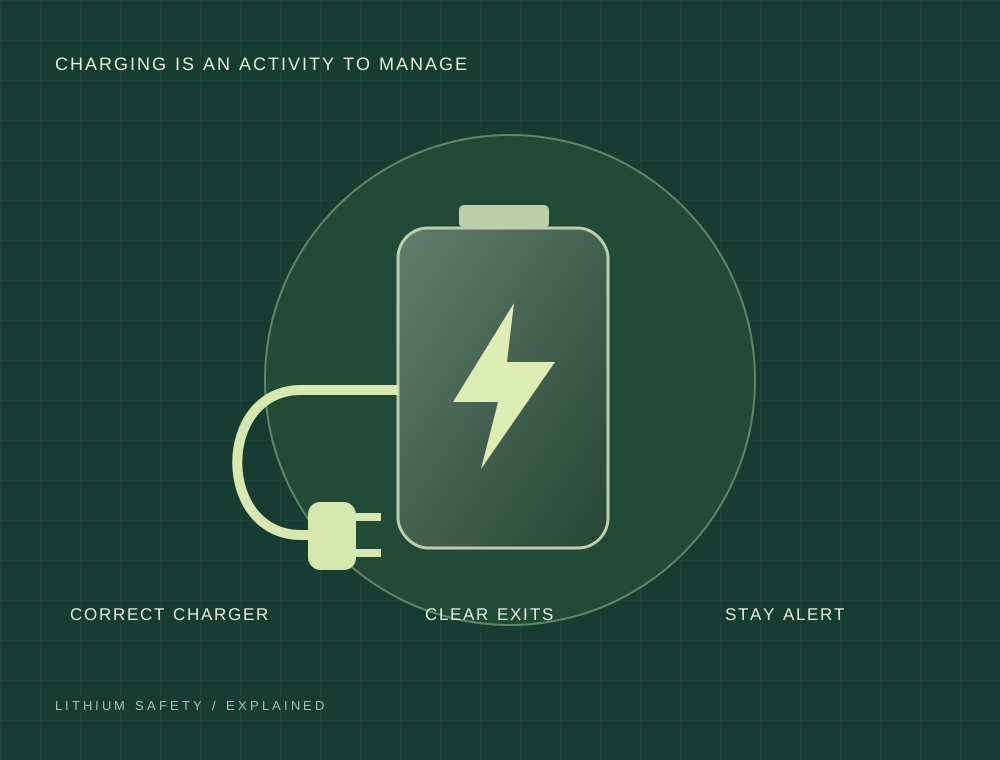 Prevention & containment
Safer charging starts with the everyday routine
The charger, charging location and the person using them all matter.
2 min read Read article ↗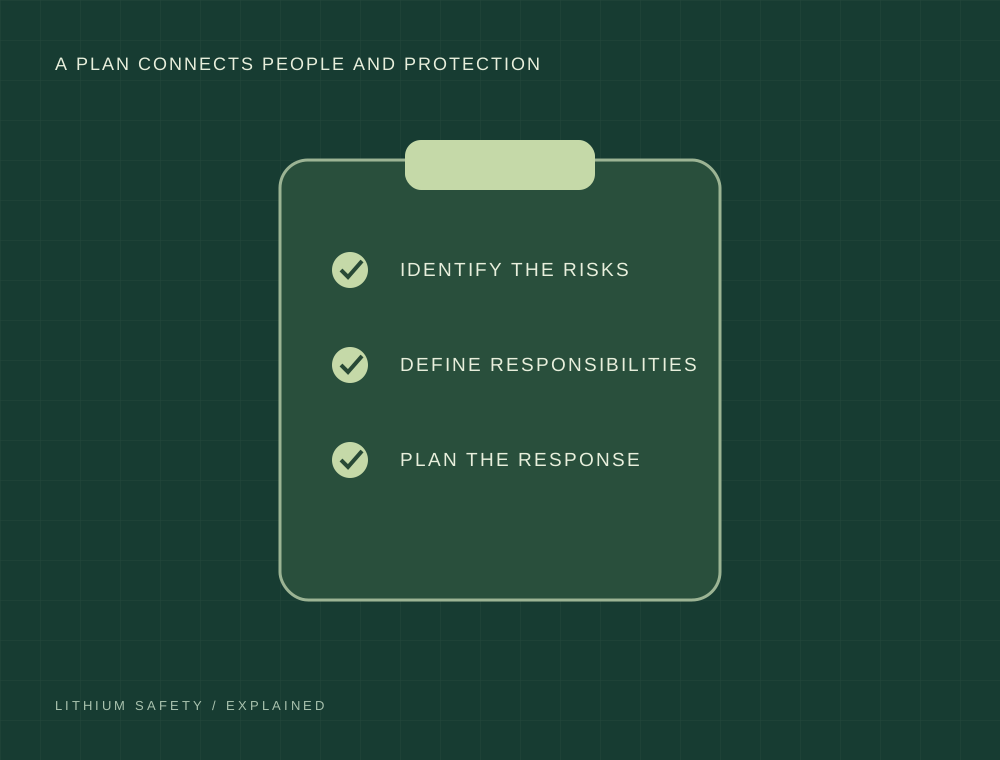 Prevention & containment
Build a safer battery-storage routine
The location, battery condition and inspection routine belong in the same plan.
2 min read Read article ↗Standards explainedContainment ratings: understand what was tested
An energy rating and a surface-temperature classification describe different parts of performance.
2 min read Read article ↗Standards explainedPGS 37: start with the battery application
Portable rechargeable batteries and stationary energy systems raise different planning questions.
2 min read Read article ↗Standards explainedWhy the application behind a standard matters
Read a standards reference alongside the intended use, rather than treating it as a complete safety plan.
2 min read Read article ↗Start with understanding.
Is battery safety only about fire?
No. Heat, released gases, battery condition and the surrounding environment all belong in the assessment.
Does containment replace an emergency plan?
Containment is one layer. Detection, responsibilities, evacuation and responder access still need to be planned.
Where should a workplace start?
Identify where batteries are used, stored and charged. Record their condition and quantity, then review the hazards and procedures with the responsible specialist.